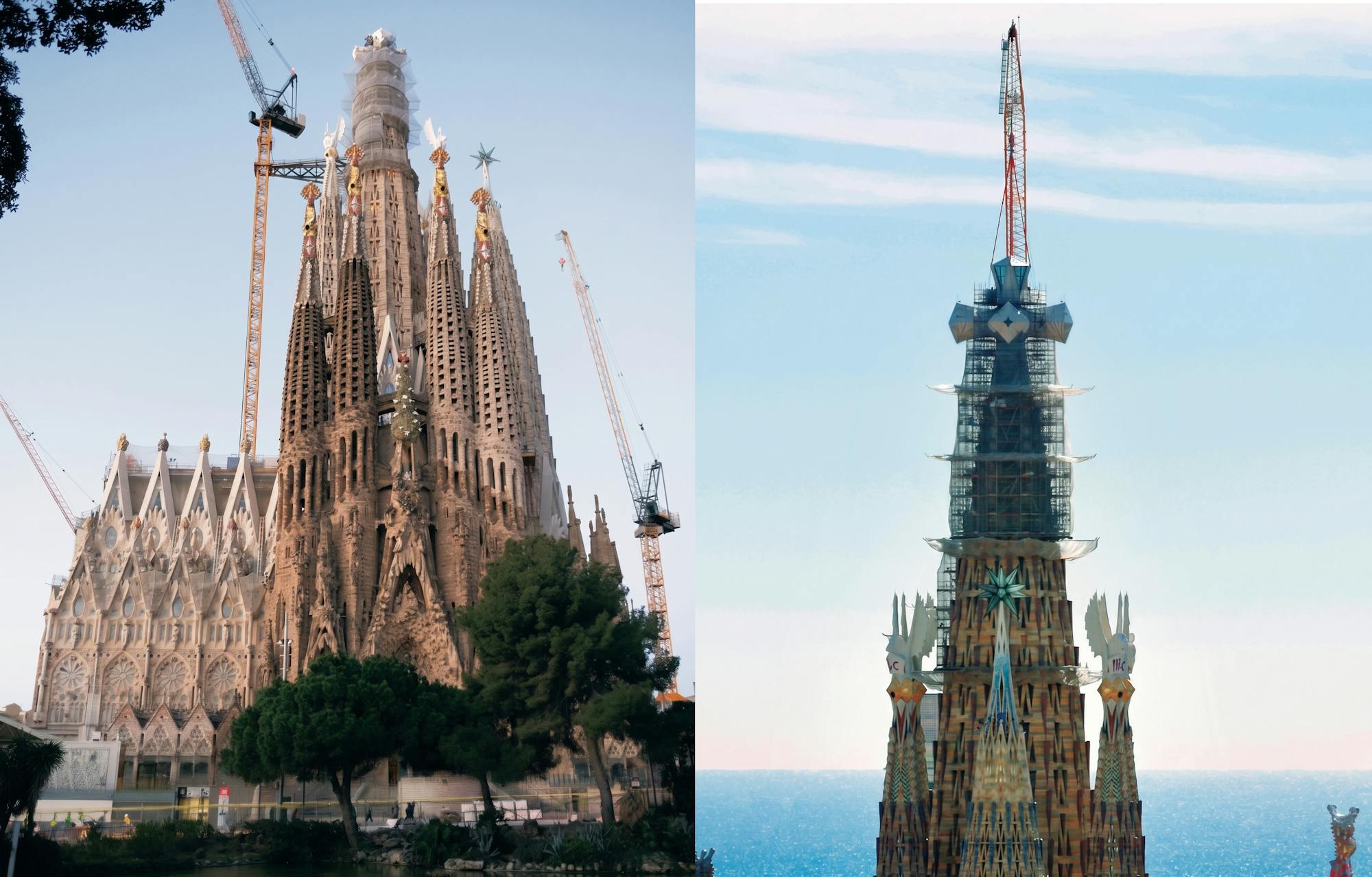
In February 2026, marking the centenary of Antoni Gaudí’s death, the main tower of the Sagrada Família was finally completed. It is an unprecedented, monumental endeavor—a vision entrusted by a single architect to future generations and sustained over 144 years of construction. With the cross placed atop the Tower of Jesus Christ, the structure reached a total height of 172.5 meters. Composed of 18 towers, it stands as the tallest church in the world.
Gaudí’s architecture comes alive and turns rigid in tandem with the light. Facing east, the Nativity Façade catches the morning sun, illuminating the angels as they celebrate the birth of Christ.
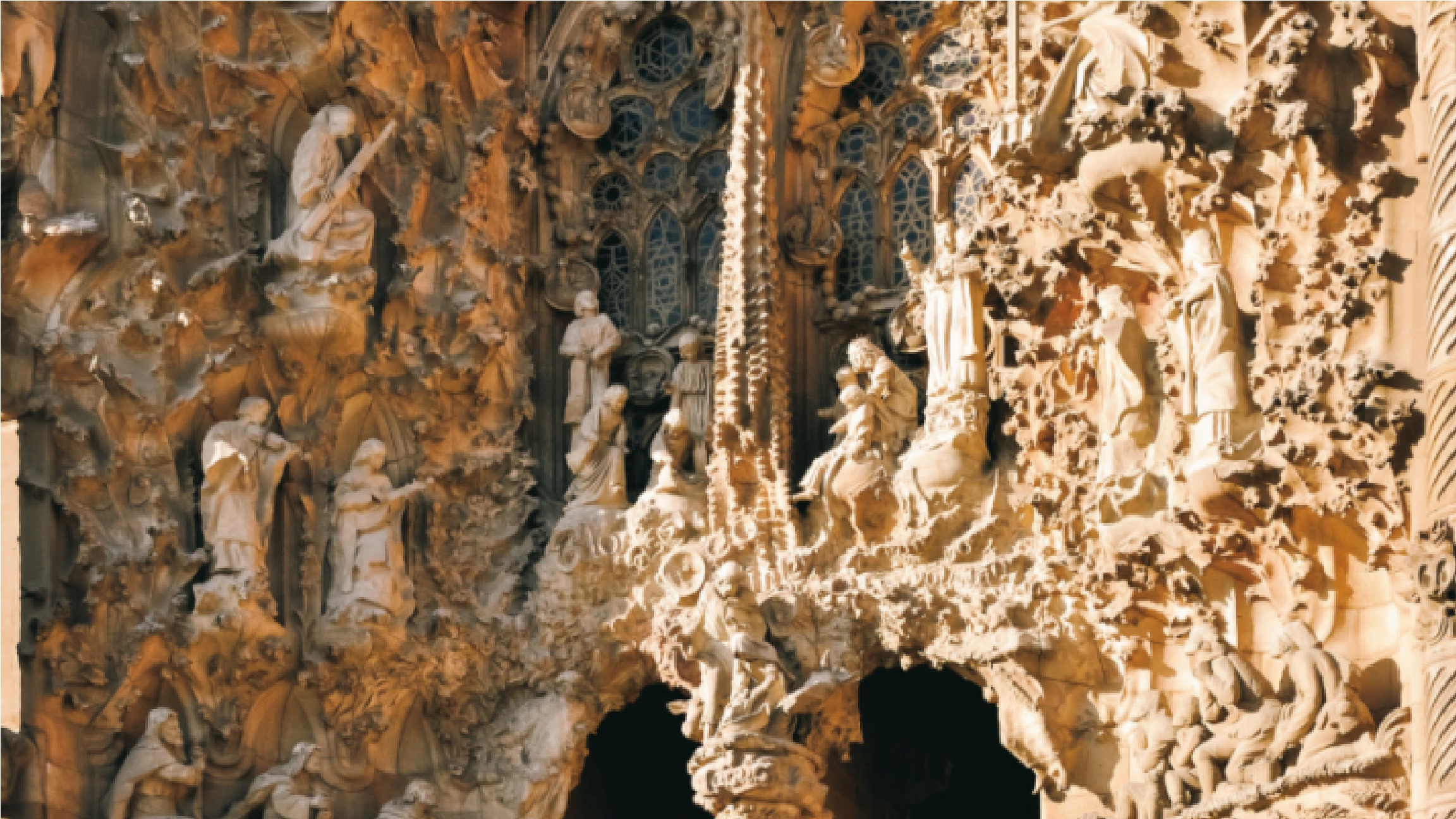
On the west-facing Passion Façade, the crucified Christ loses illumination as dusk falls, hardening into what appears to be a stark block of stone—as though life itself were quietly fading away.
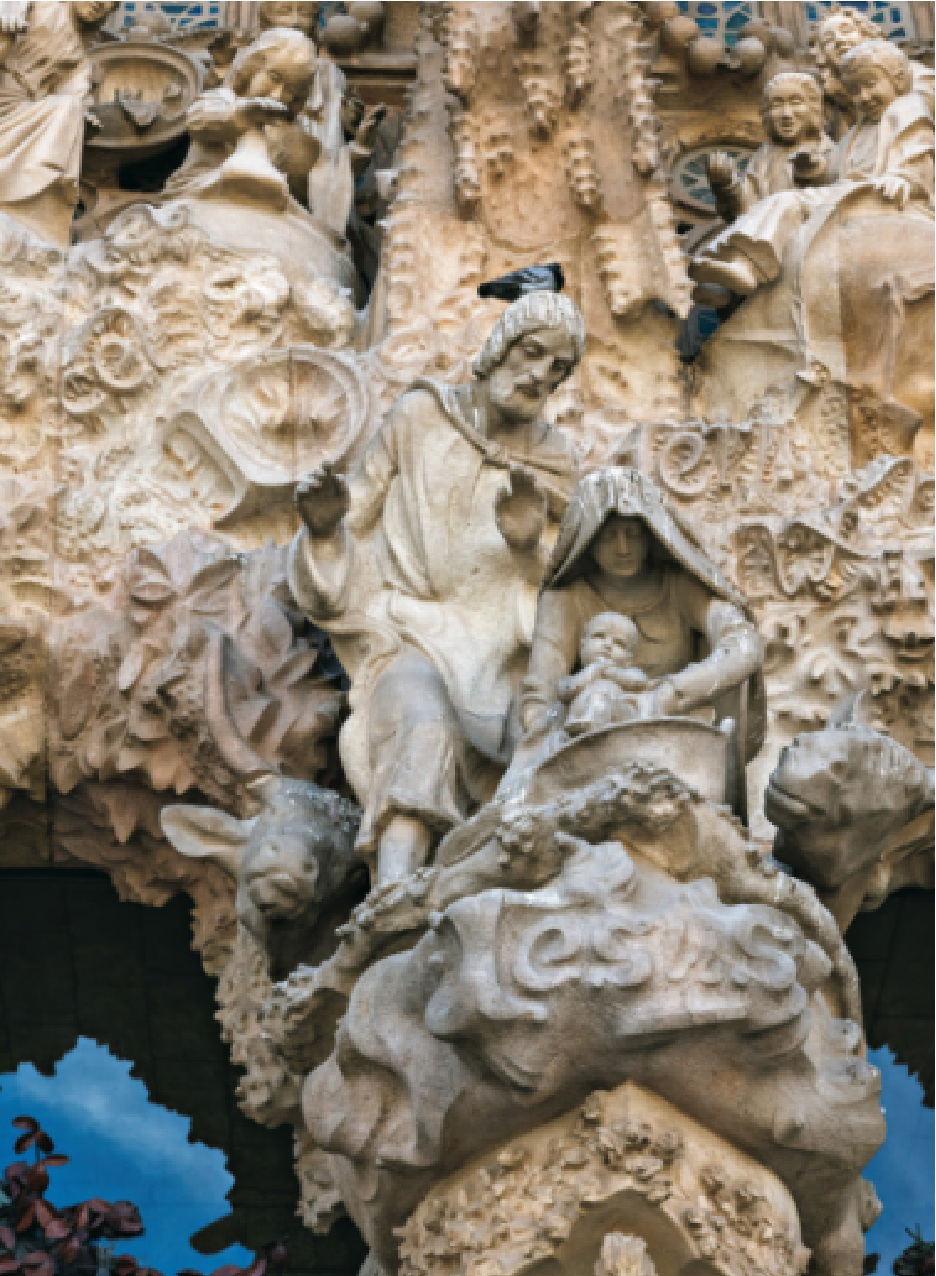
Gaudí dedicated his life to pursuing the ideal light, striving to express the biblical realm throughout the entirety of the building.
The crown of each tower features a richly colored, abstract form of solid geometry known as a "finial." Finished in trencadís—a mosaic technique using ceramic fragments and Venetian glass—these pinnacles shimmer brilliantly under the sunlight.
In his youth, Gaudí recorded his architectural ideals in a manuscript known as the Manuscrito de Reus, a notebook containing a diary and notes on "Ornamentation." Within these pages, he noted that geometric forms in ancient Greek architecture were effective for long-distance visibility. He was also known to frequently tell his disciples, "Light brings architecture to life."
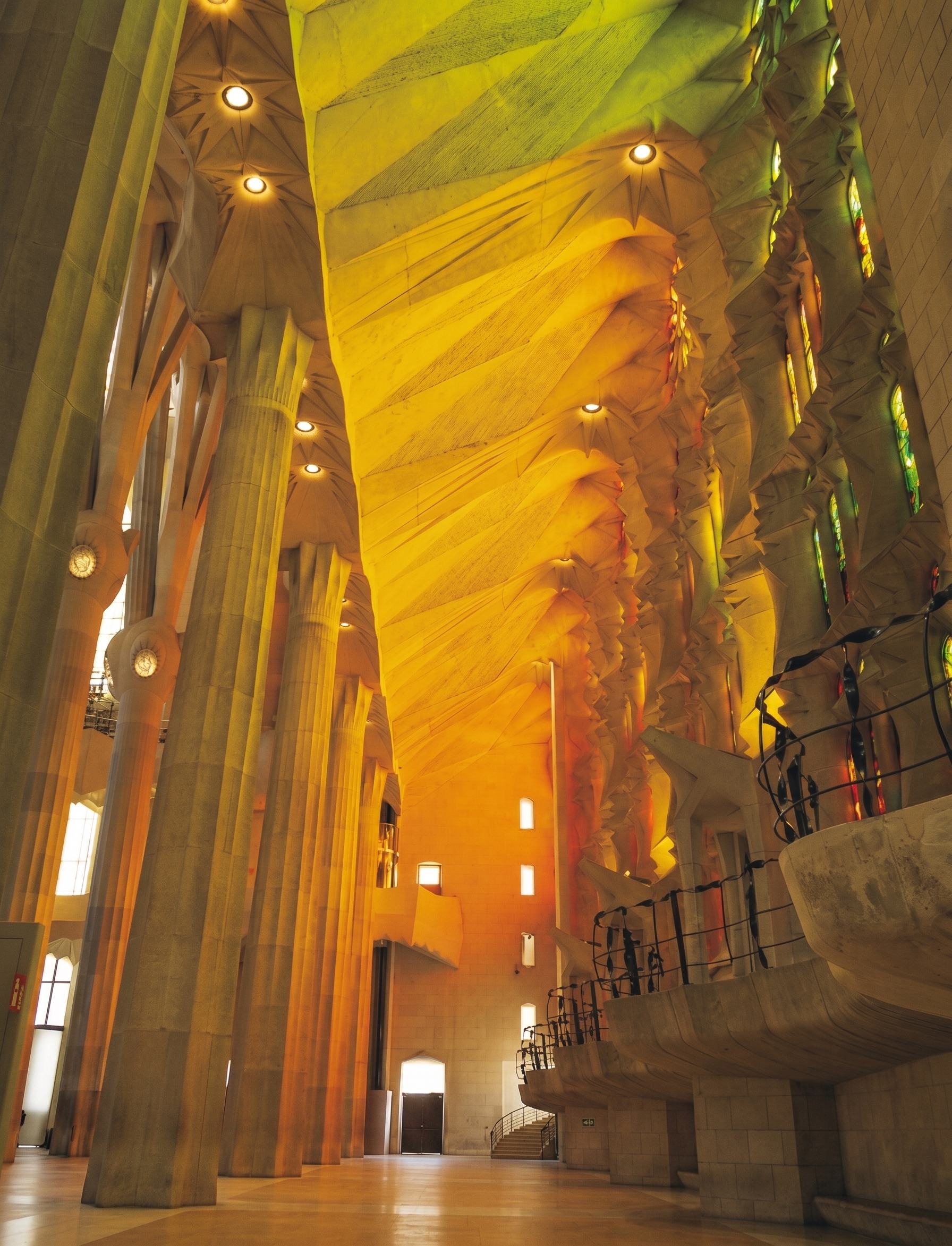
The interior of the church is similarly flooded with natural light. Branching columns support the ceiling like towering trees, while stained glass windows filter a rich canopy of dappled light across the nave. The diameters of these columns vary depending on the load each bears, and their structural shapes are uniquely distinctive.
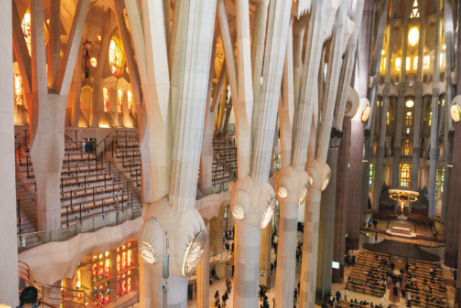
While modern engineering relies on computer simulations for load analysis, Gaudí spent nearly a decade conducting physical experiments using weighted strings and hanging chain models (funicular models). Through his philosophy of reforming Gothic architecture, he engineered a structural system that eliminated the need for flying buttresses, creating expansive surfaces where stained glass could shine to its fullest potential.