Metals are indispensable in our civilization, serving as everything from structural materials in architecture to intricate decorative elements in interior design. Understanding the fundamental knowledge of metals—their properties, how they are shaped, and how their surfaces are treated—is key to leveraging their full potential.
1. Fundamental Properties of Metal
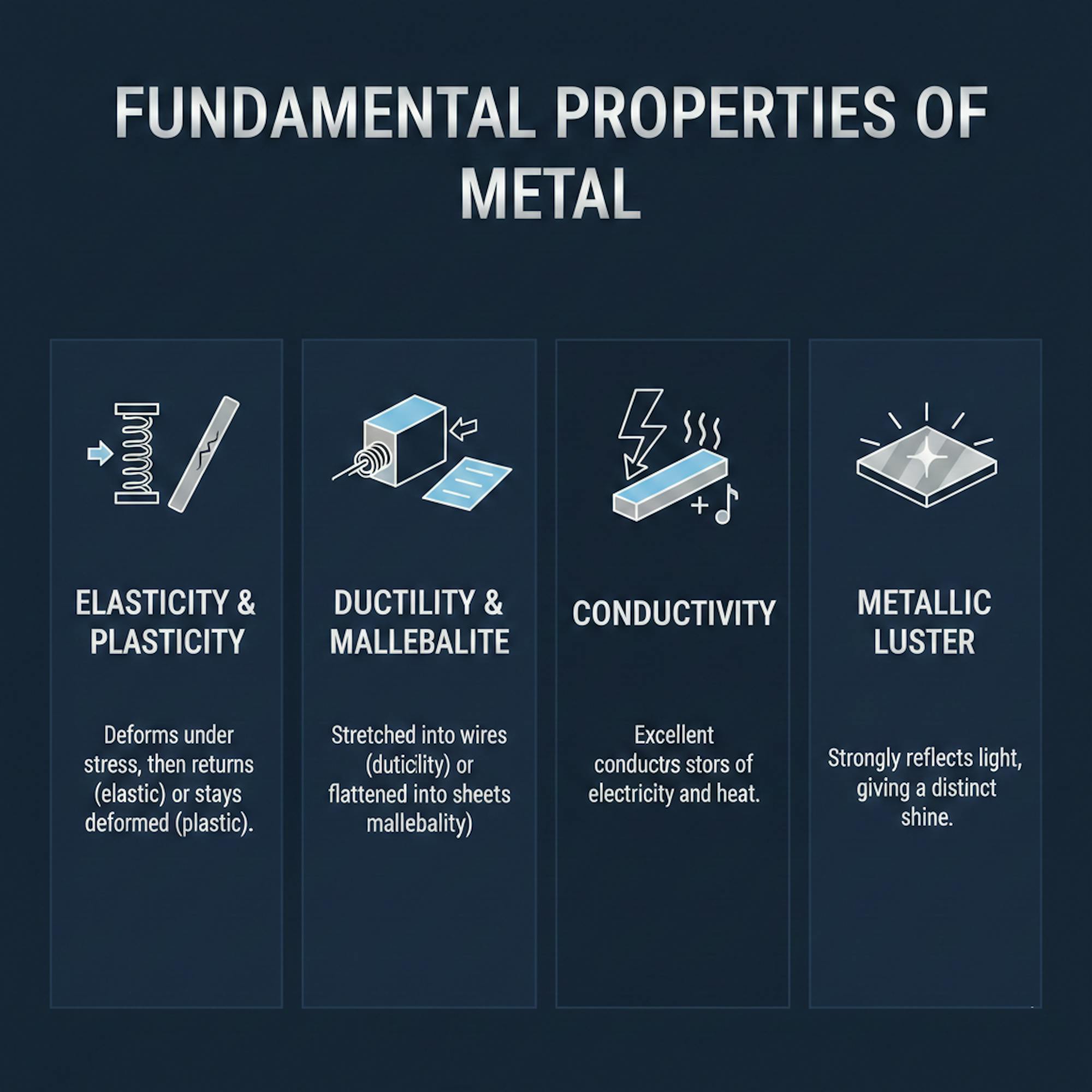
Metals possess unique characteristics that make them versatile for various applications:
- Elasticity & Plasticity: Metals return to their original shape after minor pressure (elasticity), but once a certain threshold is passed, they remain deformed without breaking (plasticity).
- Ductility & Malleability: The ability to be stretched into wires (ductility) or flattened into thin sheets (malleability) is collectively known as “formability”.
- Conductivity: Metals are excellent conductors of both electricity and heat.
- Metallic Luster: Their ability to reflect light strongly gives them a distinct shine.
2. Pure Metals vs. Alloys
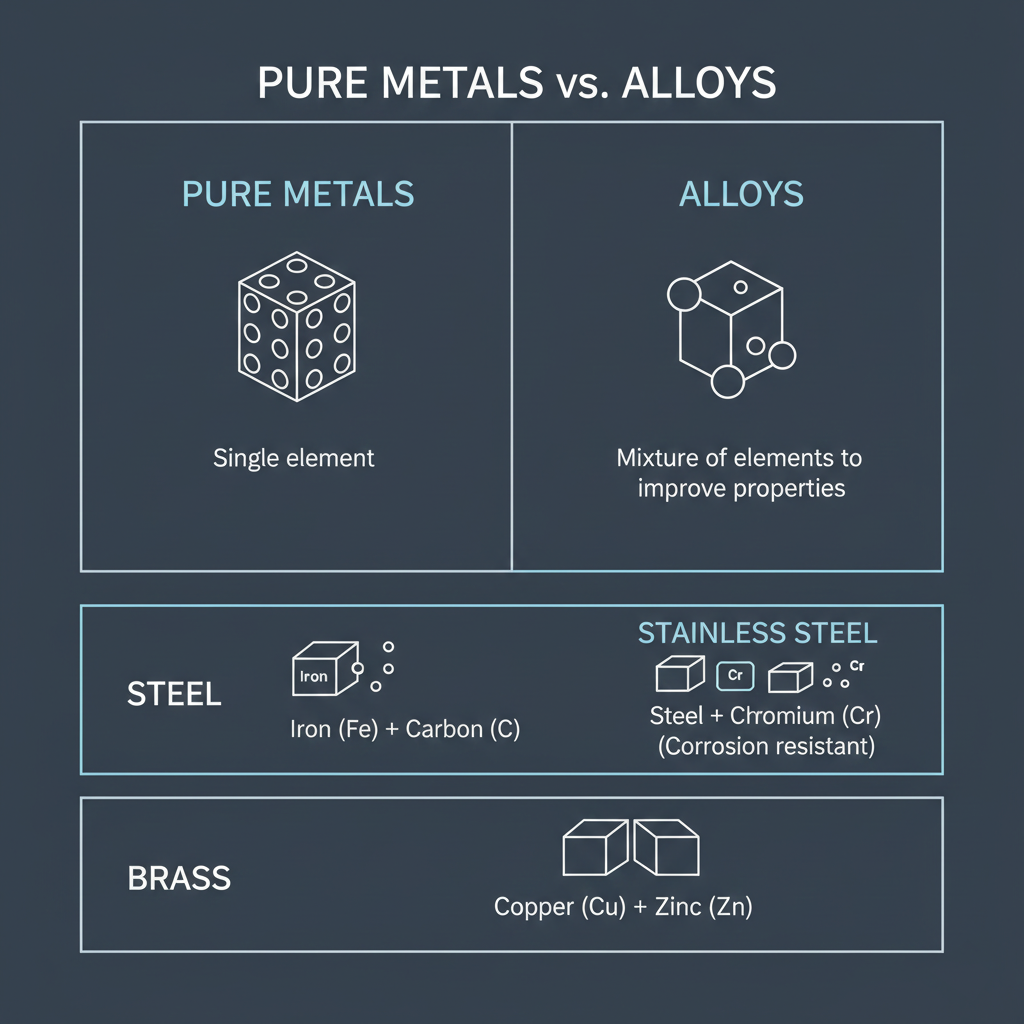
While pure metals consist of a single element, most metals used in construction and design are alloys—mixtures of a base metal with other elements to improve strength, corrosion resistance, or workability.
- Steel: An alloy of iron containing 0.02–2.1% carbon.
- Stainless Steel: Steel containing less than 1.2% carbon and at least 10.5% chromium, which forms a protective layer to prevent rust.
- Brass: An alloy of copper and zinc (typically over 20% zinc).
3. Metal Forming & Processing Methods
Metal processing generally starts with an ingot, which is then transformed into rods, plates, or pipes through various methods:
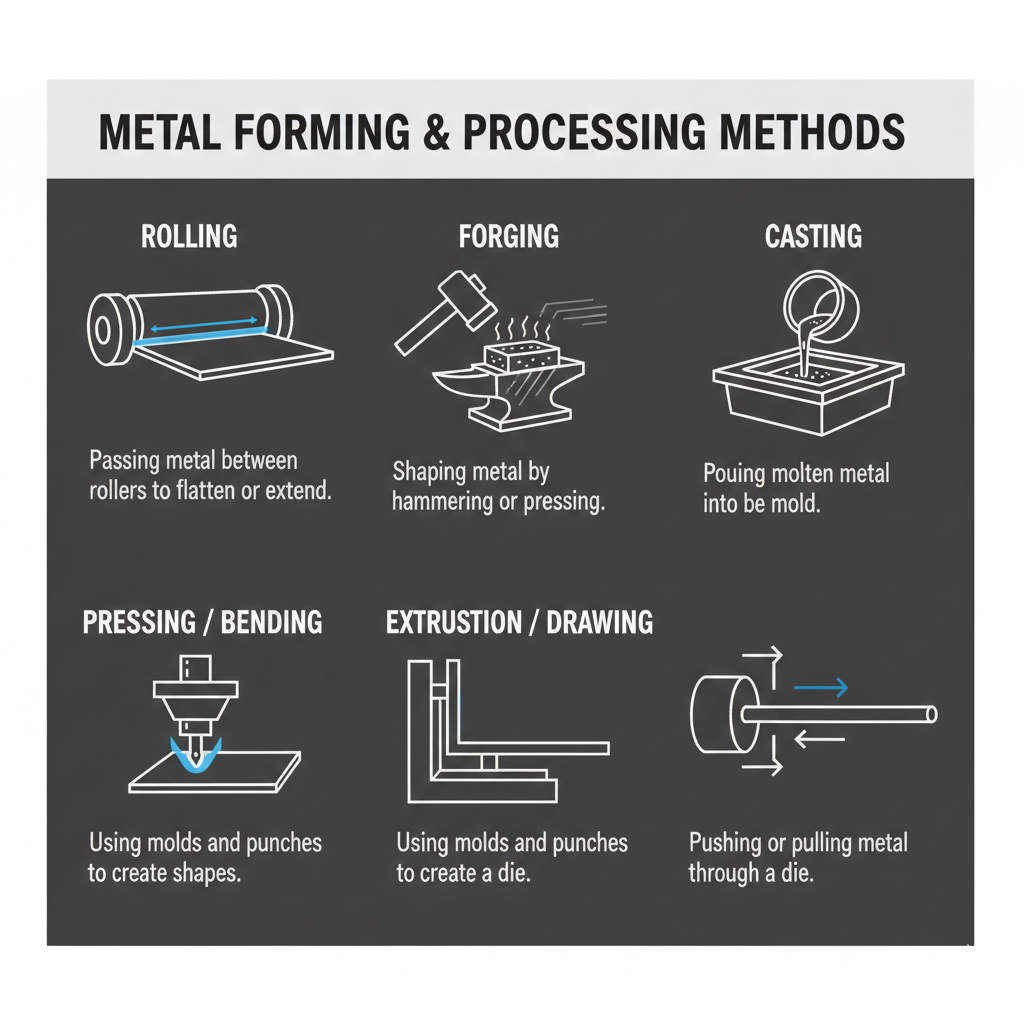
- Rolling: Passing metal between rollers to flatten or extend it.
- Forging: Shaping metal by hammering or pressing, which aligns the internal structure and increases strength.
- Casting: Pouring molten metal into a mold and letting it cool.
- Pressing/Bending: Using molds and punches to create specific shapes or angles.
- Extrusion & Drawing: Pushing or pulling metal through a die to create long, uniform shapes.
4. Enhancing Metal: Surface Treatment
Raw metal can be prone to scratching or corrosion. Surface treatments are applied to compensate for these weaknesses and add aesthetic value.
Physical/Mechanical Finishes
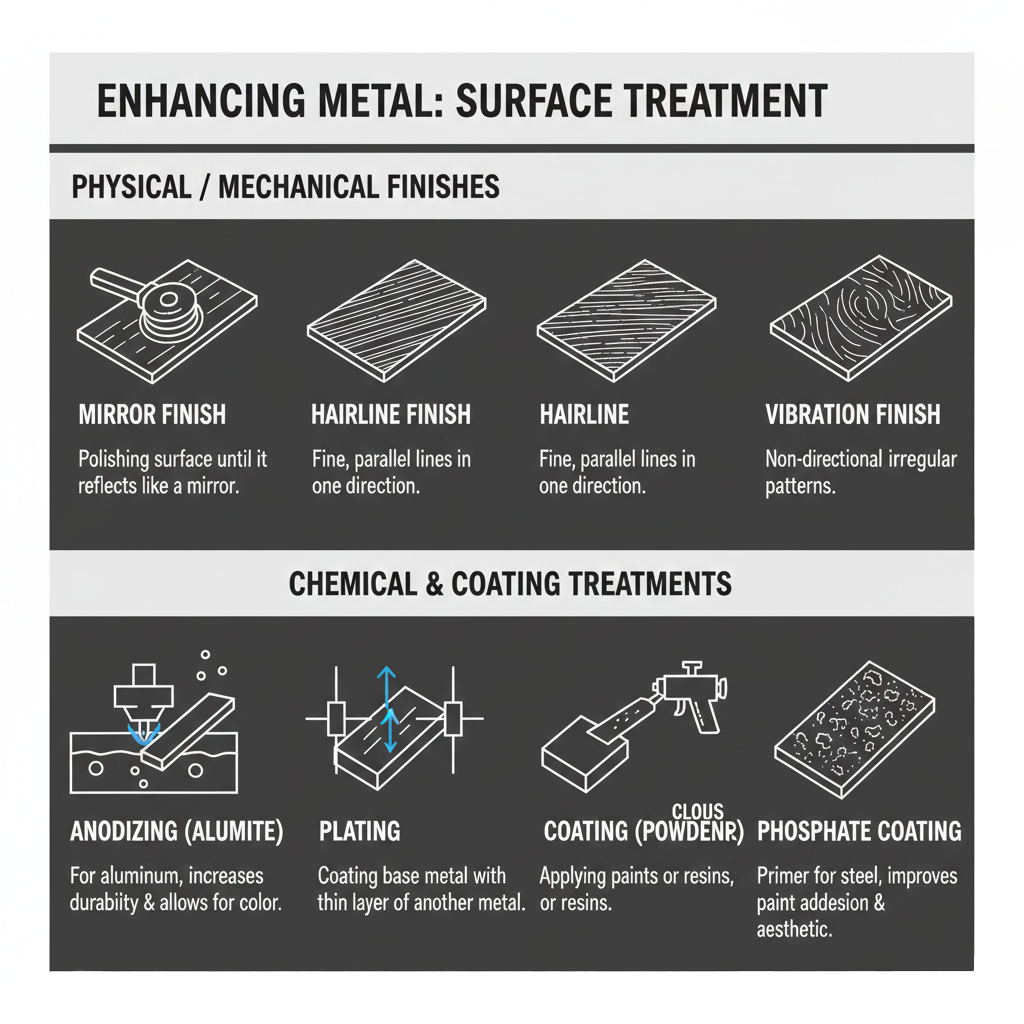
- Mirror Finish: Polishing the surface until it reflects like a mirror using abrasive tools called “buffs”.
- Hairline Finish: Creating fine, parallel lines in one direction for a matte, sophisticated look.
- Vibration Finish: Non-directional, irregular patterns that make scratches less noticeable.
Chemical & Coating Treatments
- Anodizing (Alumite): Specifically for aluminum, this process grows the natural oxide layer to increase durability and allow for vibrant dye coloring.
- Plating: Covering the base metal with a thin layer of another metal (like gold or zinc) via electrolysis or dipping.
- Coating (Powder & Solvent): Applying paints or resins. Powder coating is particularly durable and environmentally friendly as it uses no solvents.
- Phosphate Coating: Often used as a primer for steel to improve paint adhesion and provide a unique, mottled aesthetic.
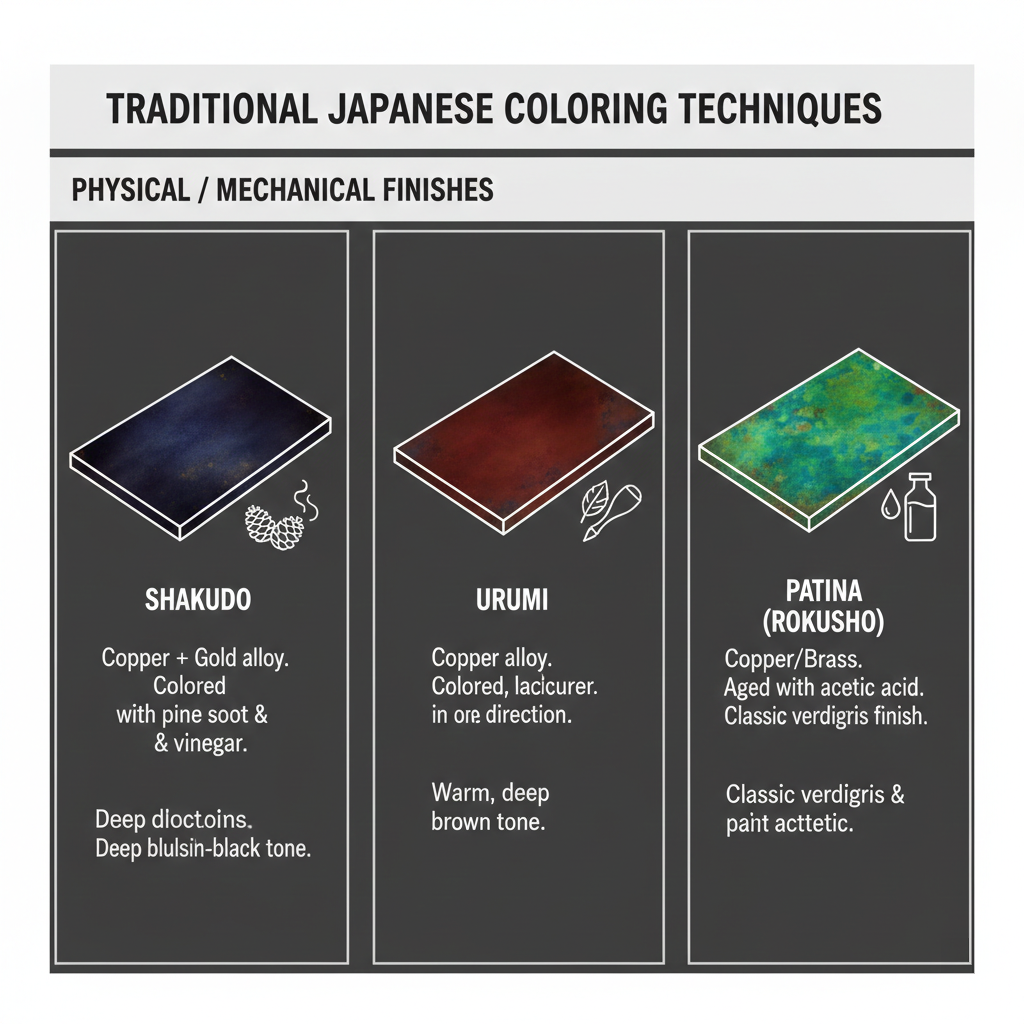
5. Traditional Japanese Coloring Techniques
Japan has a long history of unique metal coloring for architectural hardware, using natural materials like pine soot, lacquer, and vinegar to create deep, earthy tones such as Shakudo (bluish-black) and Urumi (deep brown).
Conclusion
From the ancient Hittites to the Industrial Revolution, the evolution of metalworking has shaped human history. Today, by combining traditional craftsmanship with modern technology like laser cutting and vacuum deposition, the possibilities for metal in design are virtually limitless.