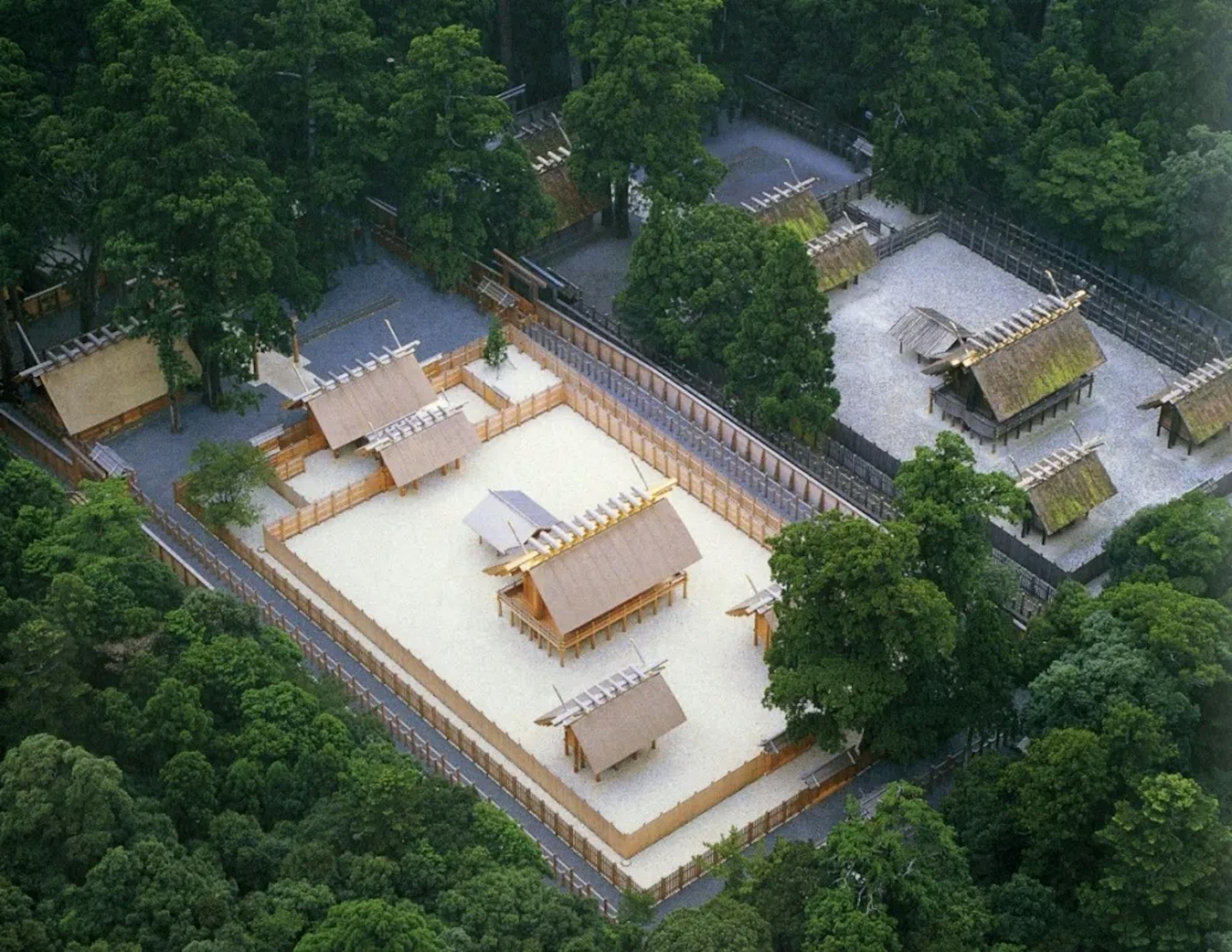
'Shikinen Sengu' is a Shinto ritual held every 20 years to rebuild the Grand Shrine of Ise in Japan, with this marking its 62nd iteration. The full ritual spans eight years from start to finish, and today, the ceremony marking the finale of the entire process was completed. Two identical structures, referred to as 'Naiku' and 'Geku,' stand adjacent to one another, being rebuilt alternately every 20 years.
The original construction method is intended to be preserved since the beginning of this ritual in 690 AD, while it signifies the mentality that old is welcomed as new.
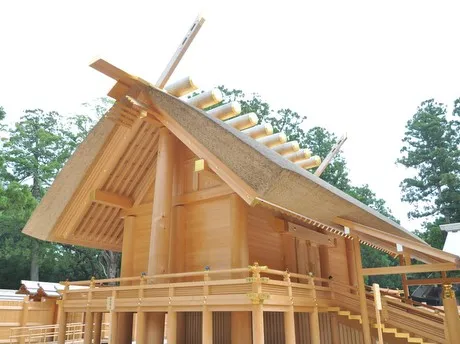
The shrine is built entirely of hinoki (Japanese cypress) while the roof is thatched, and grain-less ideal logs had been designated carefully from the surrounding forest approximately 2 centuries in advance. The Shinto craftsmen prepare the logs in shape and treat them with persimmon juice to bring out a golden hue. The carpenters use traditional hand tools that have been employed for centuries, and that all joineries are assembled without a nail or glue.
This timeless architecture signifies the laws of nature, as if it breathes the energy of our existence.